
Kuari Pass Trek
The Ultimate Winter Wonderland of Uttarakhand
Experience snow-covered trails, pine forests & 360° Himalayan views
Kuari Pass Trek at a Glance
Easy to Moderate
Trek Difficulty

7 Day
Trek Duration
12516 FT
Altitude

Suitable For
15-50 years
Trek distance
33 km

Base Camp
Joshimath

Stay
Tents

Region
Uttarakhand

Pick up
Dehradun

Drop off
Dehradun

Cloakroom
Available

Off loading
Available
Moderate
Trek Difficulty
7 Days
Trek Duration
12516 FT
Altitude
Suitable For
15-50 years
Stay
Tents
Region
Uttarakhand
Pick up
Dehradun
Drop off
Dehradun
Trek distance
33 km
Base Camp
Joshimath
Cloakroom
Available
Off loading
Available
What Trekker say about Kuari Pass Trek
Kuari Pass was pure magic with snow-covered forests, endless mountain views, and peaceful camps that made every step unforgettable. As a beginner, I felt safe throughout, and watching sunrise over Nanda Devi was the highlight of my life—beauty and adventure together.
Manoj Singh
Genpact
Kuari Pass exceeded all expectations with fairytale oak forests, glowing Himalayan peaks, and well-paced trails that deliver stunning scenery every single day. Winter camping under the stars was surreal, and I came back with incredible memories, photos, and a heart full of gratitude.

Suman Rangar
Marketing manager at Brandbee
Kuari Pass is the perfect introduction to Himalayan trekking with breathtaking views of Nanda Devi, Kamet, and Trishul surrounded by snow, silence, and peaceful village life. It was challenging, rewarding, and incredibly peaceful—with deep bonds formed around campfires each night.

Navdeep Jangra
Senior Software Developer at HCL
Kuari Pass Trek: Where Snow, Silence, and the Himalayas Meet
The Kuari Pass Trek is one of the most enchanting winter treks in Uttarakhand, offering a perfect blend of natural beauty, adventure, and peace. Nestled in the Garhwal Himalayas, the trail leads to an altitude of about 12,516 feet and rewards trekkers with breathtaking views of some of India’s highest and most majestic peaks. From the top, you can admire Nanda Devi, Dronagiri, Kamet, and Chaukhamba rising proudly against the vast blue sky. Also known as the Lord Curzon Trail, this historic route was explored by the British Viceroy in the early 1900s and still carries a timeless charm.
What makes Kuari Pass truly special is the journey itself. The trail winds through dense oak and rhododendron forests, wide alpine meadows, and quiet mountain villages where warm smiles and simple hospitality greet you. The trek is considered moderate in difficulty, making it suitable for beginners as well as seasoned trekkers. Each day brings something new—snowy paths, golden sunrises over the peaks, and nights spent under star-filled skies in peaceful campsites.
Winter is the best season to experience Kuari Pass in all its glory. From December to March, the region turns into a magical white landscape, with snow-covered trails and shimmering mountain views. Whether you seek adventure, solitude, or the raw beauty of the Himalayas, the Kuari Pass Trek promises an unforgettable experience that stays with you long after the journey ends.
The Secret Behind Kuari Pass’s Popularity as a Winter Trek
Kuari Pass Trek has earned its place as one of India’s most loved winter adventures—and for good reason. From the summit, trekkers are rewarded with sweeping views of over a dozen Himalayan peaks. Nanda Devi, India’s second-highest mountain, dominates the skyline, joined by Dronagiri, Kamet, and Trishul. What truly sets Kuari Pass apart is its rare balance of beauty and accessibility. Unlike many high-altitude treks that demand extreme endurance, this trail is friendly to beginners while still exciting for experienced hikers. The gradual ascent and well-marked paths make reaching the top both achievable and deeply satisfying.
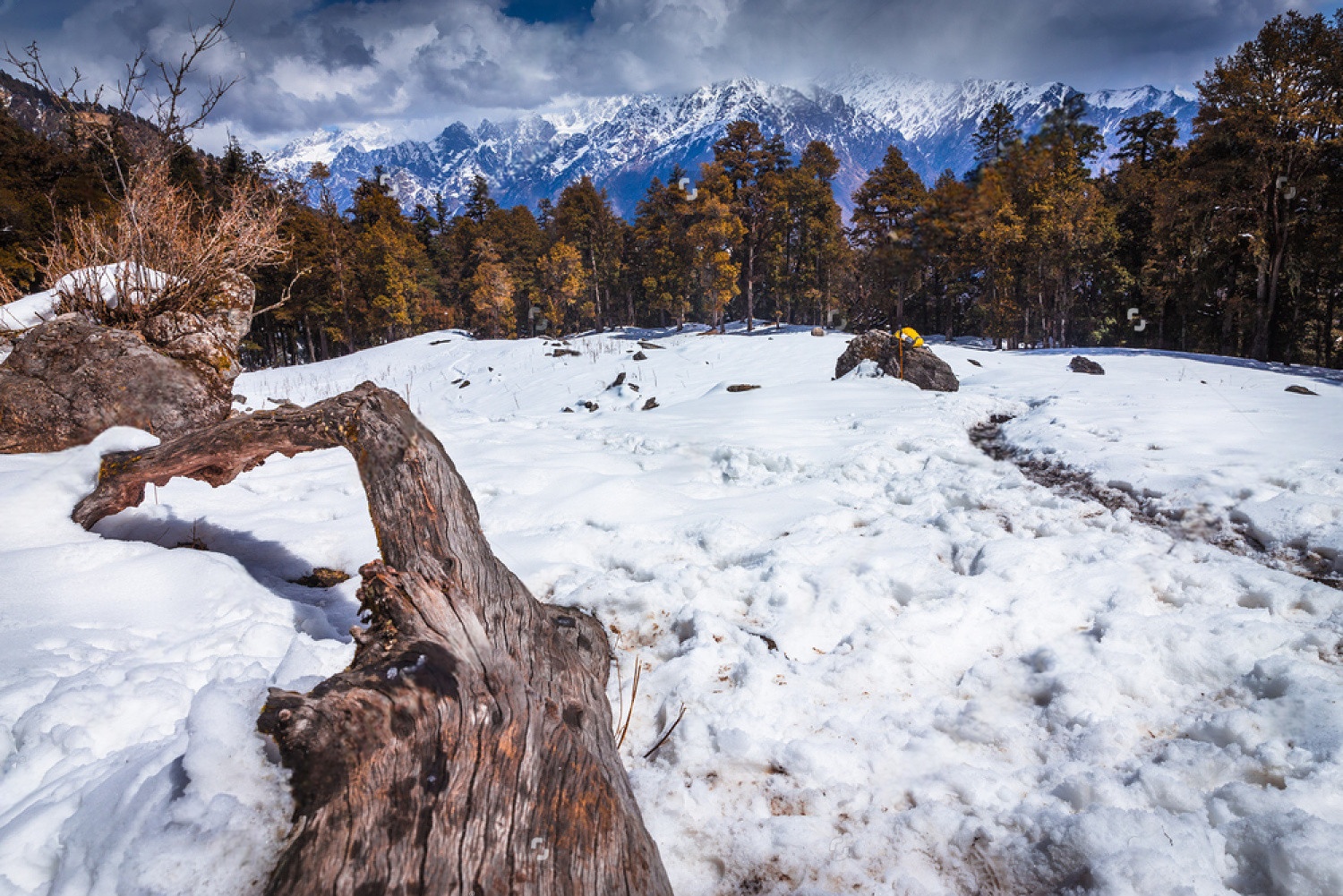
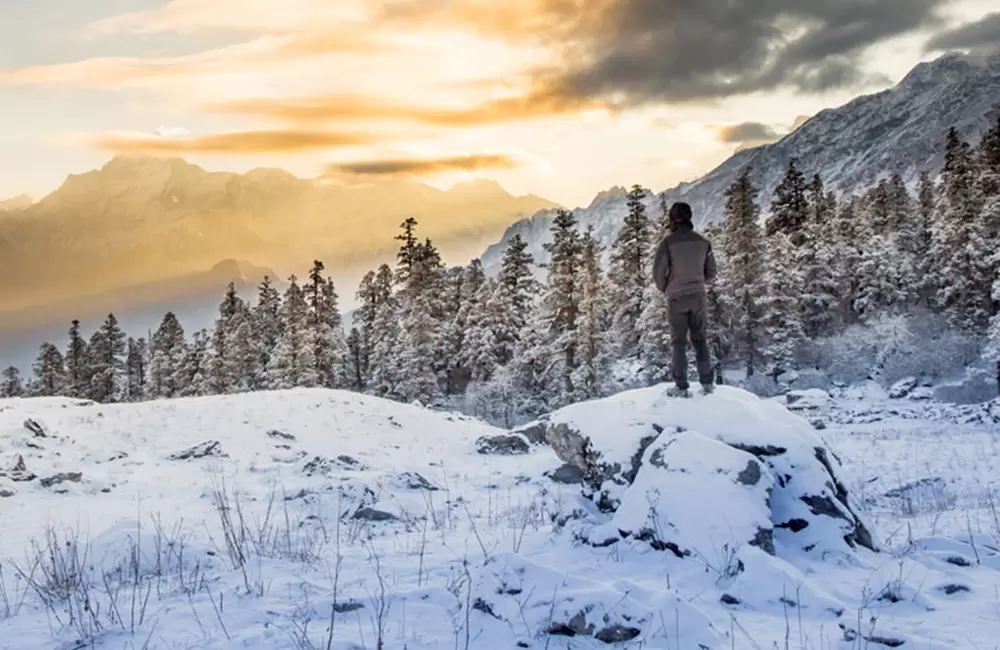
In winter, Kuari Pass transforms into a magical white world. Between December and March, heavy snowfall blankets forests, meadows, and ridgelines in pristine snow. Oak trees look straight out of a fairytale, their branches heavy with frost. Camping here is unforgettable—sitting by a warm fire under a star-filled sky, with snow-covered peaks glowing in the moonlight. The sunrises are especially stunning, as the first light paints the mountains in shades of pink, gold, and orange.
Beyond the scenery, the trek offers a true Himalayan experience. You pass through villages like Tugasi and Khullara, meet warm-hearted locals, and follow the historic Lord Curzon trail—making Kuari Pass a journey trekkers return to again and again.
Trek Fee
₹7500 + 5% GST
Complete Package from Dehradun To Dehradun.
Optional: ₹500 Per Day Backpack Offloading - base
Trek Registration
Similar Treks
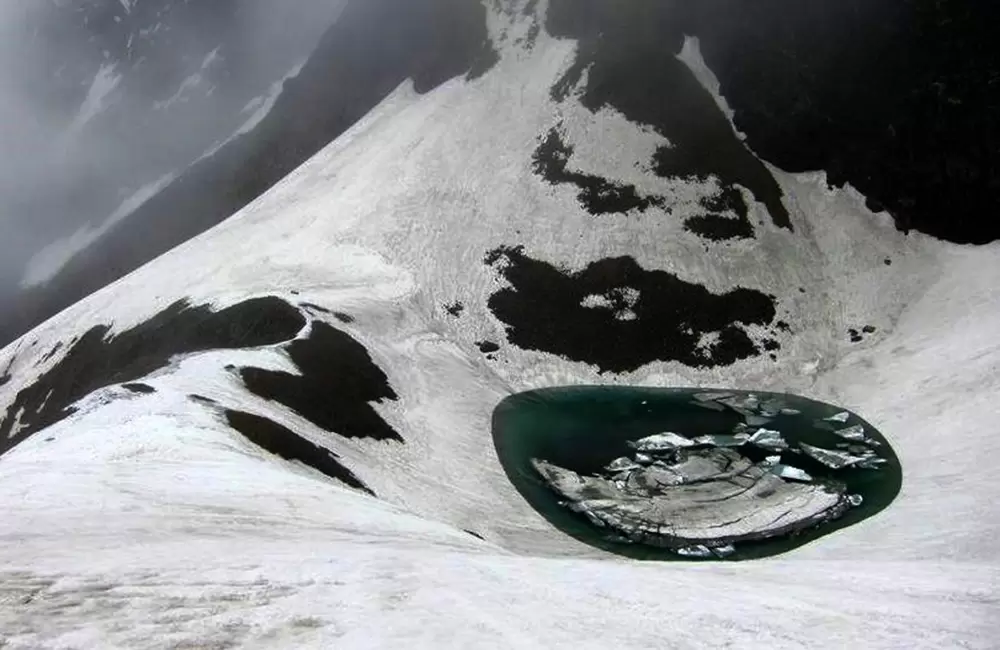
Roopkund trek
Uttarakhand
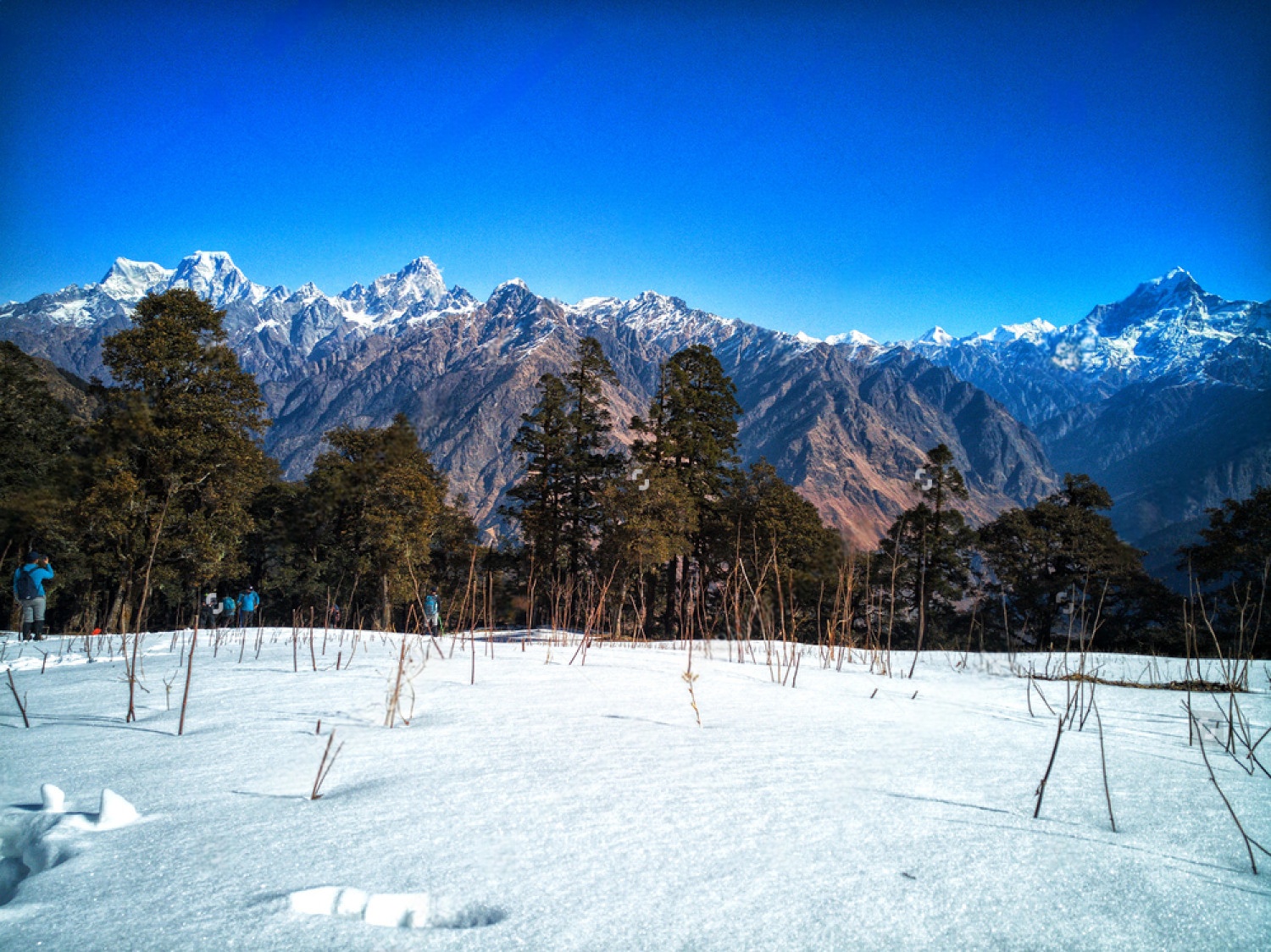
Gulabi Kantha trek
Uttarakhand
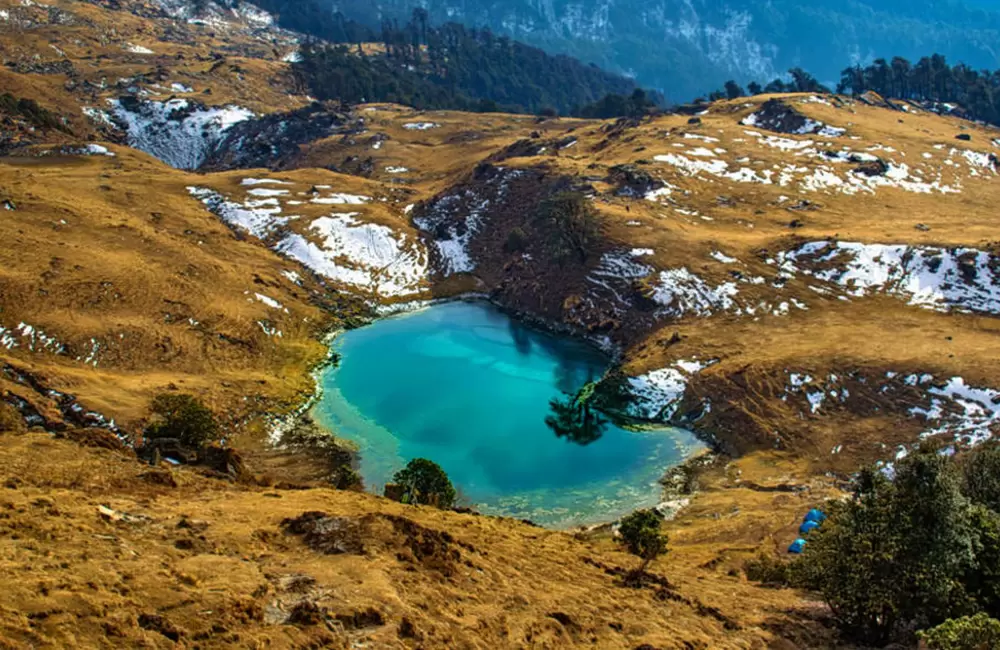
Brahmatal trek
Uttarakhand
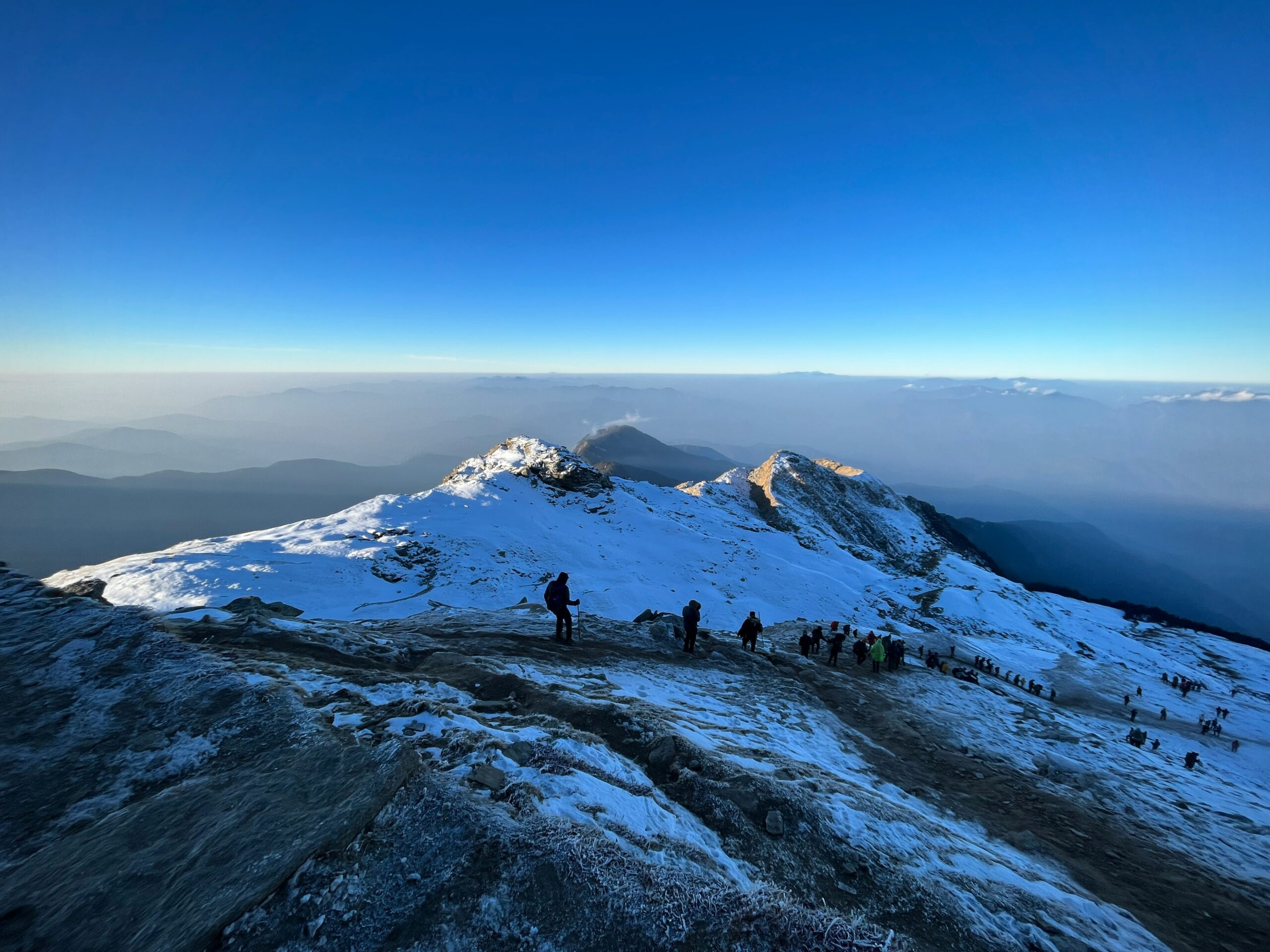
Kedarkantha Trek
Uttarakhand
Vallley of Flower
Uttarakhand
Best Time to Visit
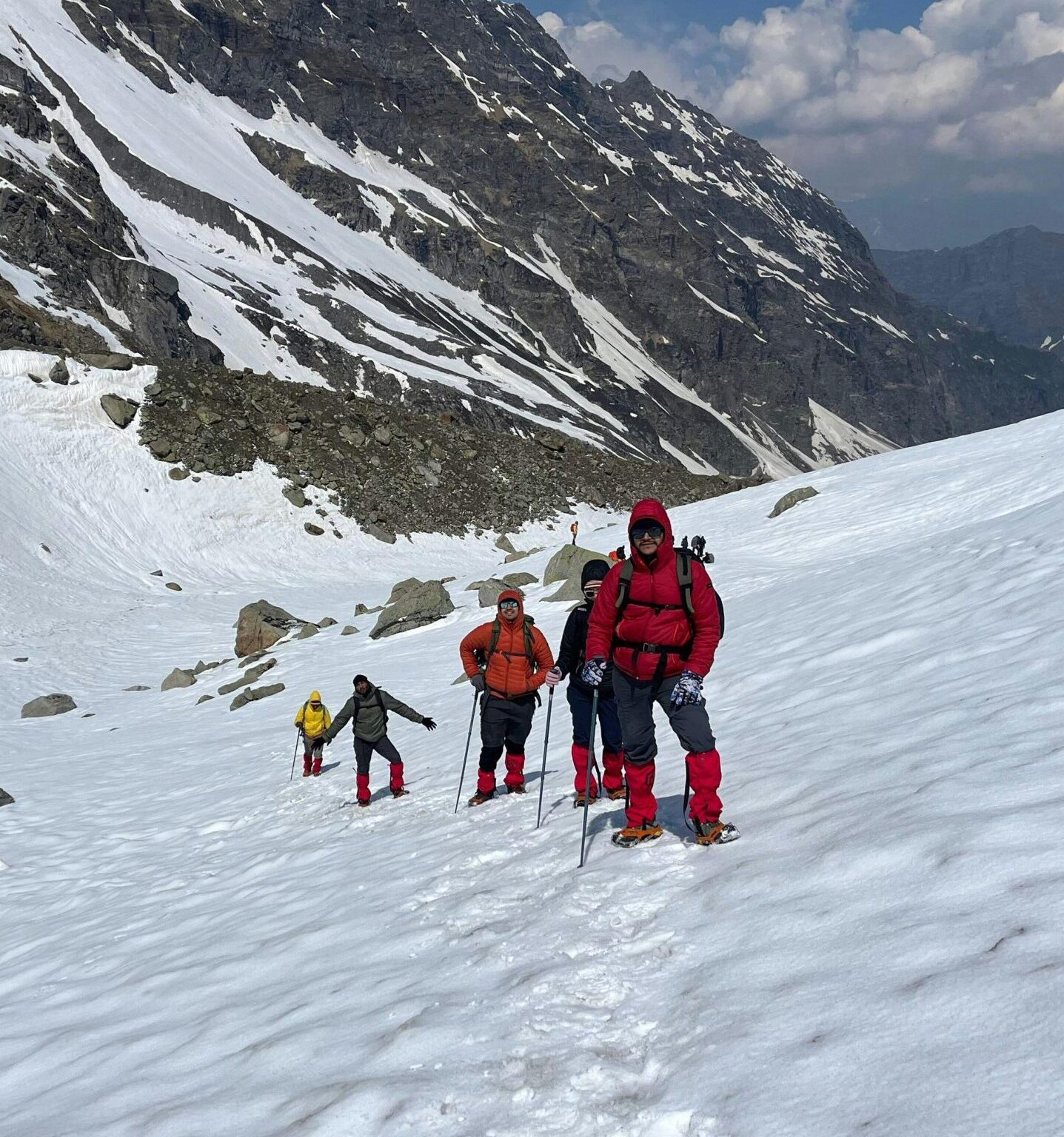
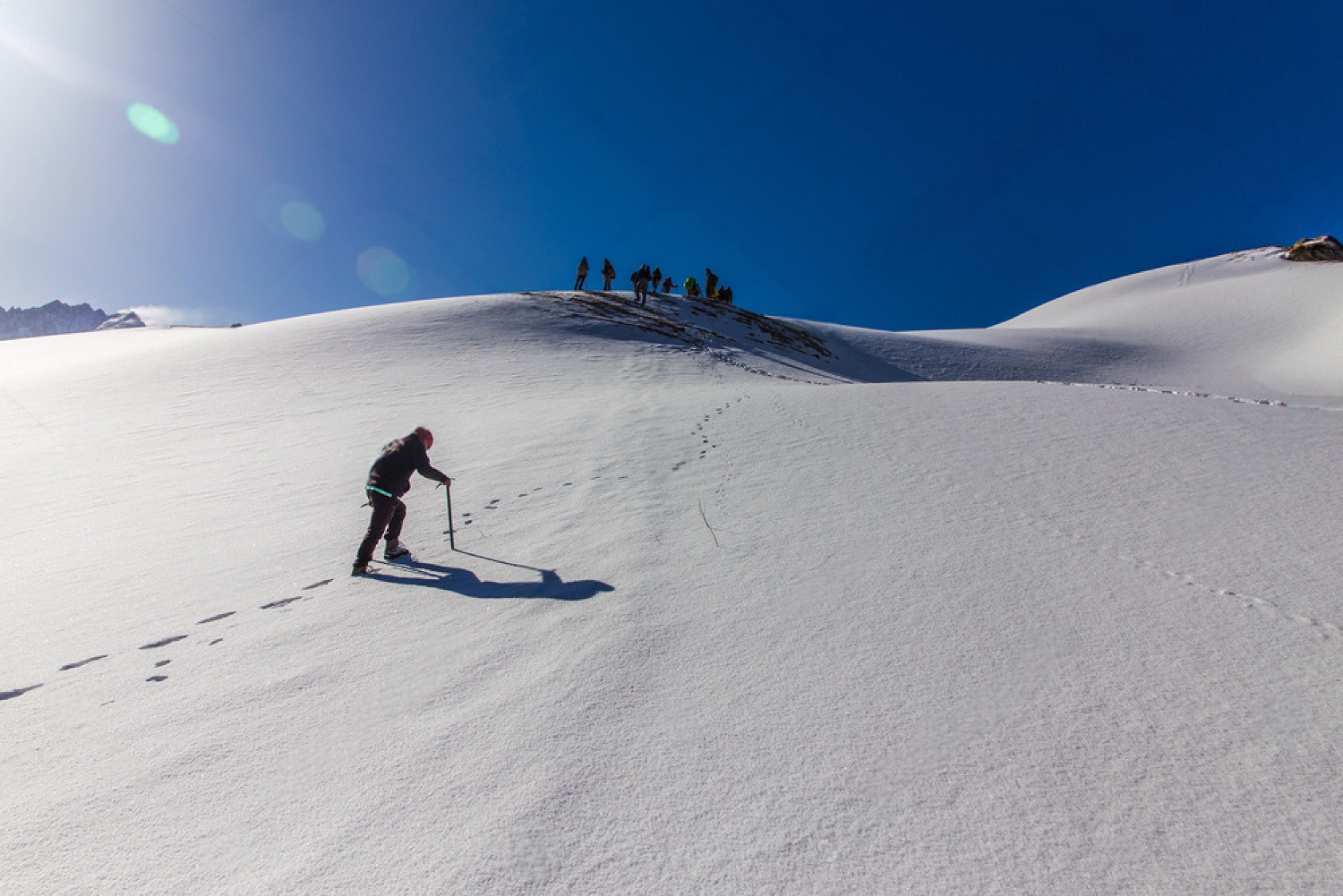
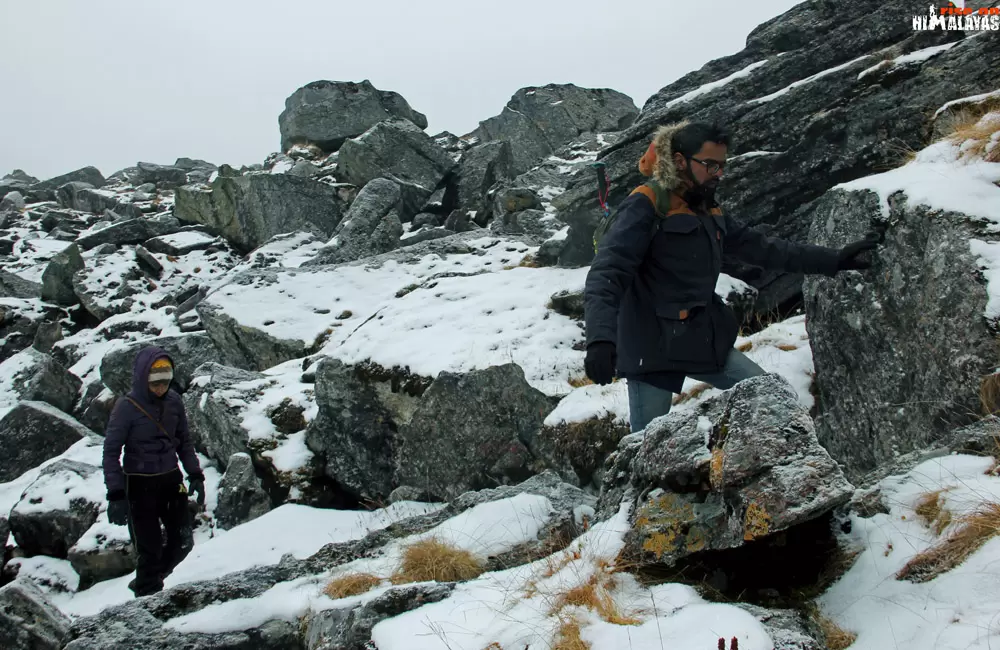
This season is perfect for trekkers who want a true snow adventure. From December to March, Kuari Pass is completely covered in snow. The trail has thick snow, temperatures drop very low, and walking becomes challenging. Proper winter gear like snow gaiters, microspikes, and warm clothing is absolutely essential. The views look straight out of a fairy tale. However, this season is best suited for trekkers who already have some experience in winter trekking.
In spring, the trek takes on a fresh and colourful look. The upper sections still have snow patches, while the lower forests and meadows begin to turn green. The highlight of this season is the bright red and pink rhododendron flowers that make the trail extremely beautiful. The weather is generally pleasant—mild during the day and cold at night. This season is ideal for trekkers who want a balance of snow and nature.
May and June are very comfortable months for the Kuari Pass Trek. Most of the snow has melted and the trail is completely clear. Meadows look lush and green, the sky is mostly clear, and temperatures are perfect for trekking. Walking is easy in this season, which makes it great for beginners and first-time high-altitude trekkers. Campsite weather is pleasant and mountain views are sharp and wide.
Autumn is considered the most scenic season for the Kuari Pass Trek. After the monsoon, the air becomes crisp and the skies turn crystal clear. You get continuous panoramic views of the Garhwal Himalayas, including Nanda Devi, Dronagiri, Hathi Ghoda, and Kamet. The trails are dry and safe, and the surroundings feel fresh and vibrant. This season is perfect for photographers and mountain lovers.
Heavy rainfall during this period makes the trail slippery and unsafe, with a high risk of landslides. This season should be completely avoided for safety reasons.
Through the Lens: Kuari Pass Trek Scenic Views
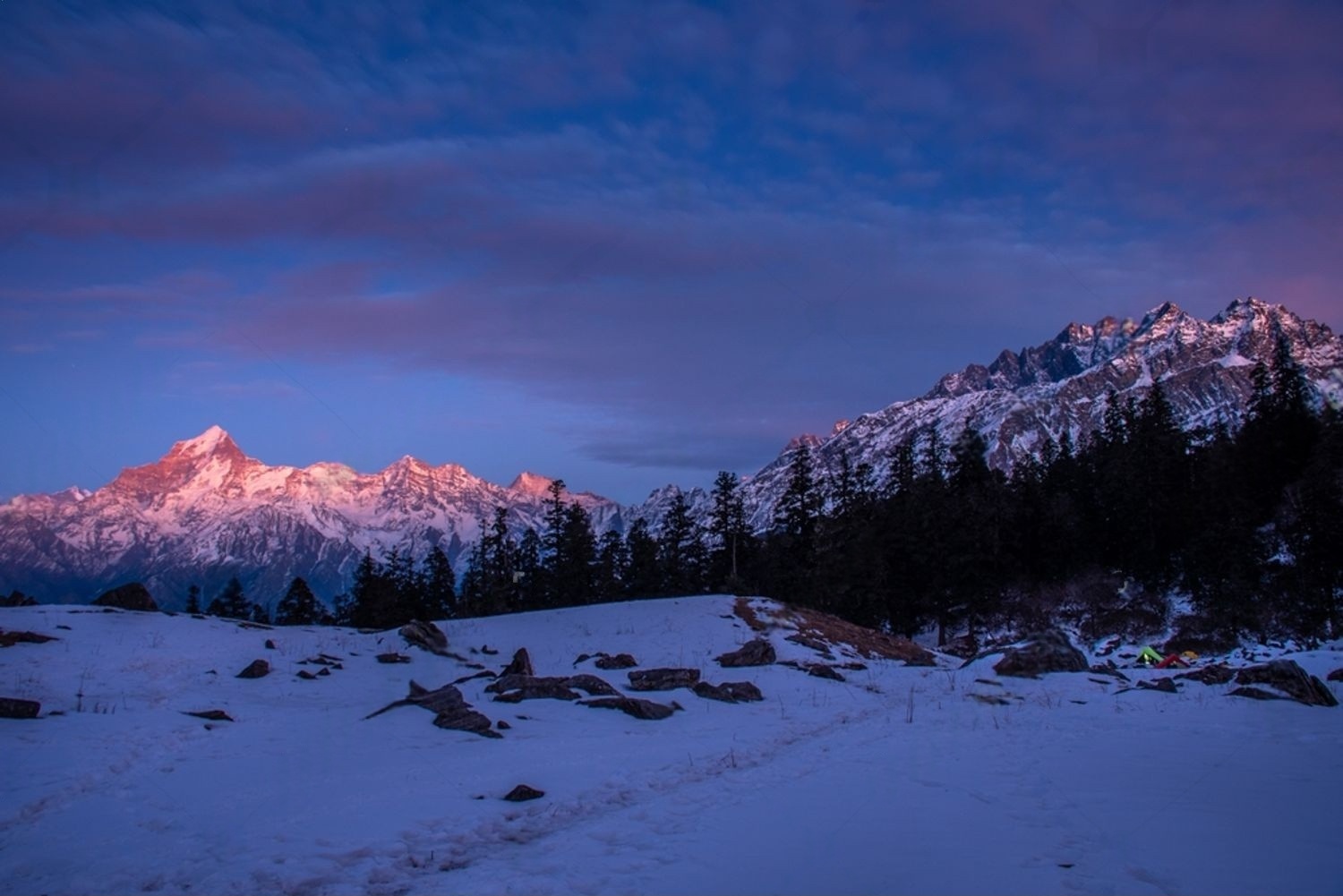
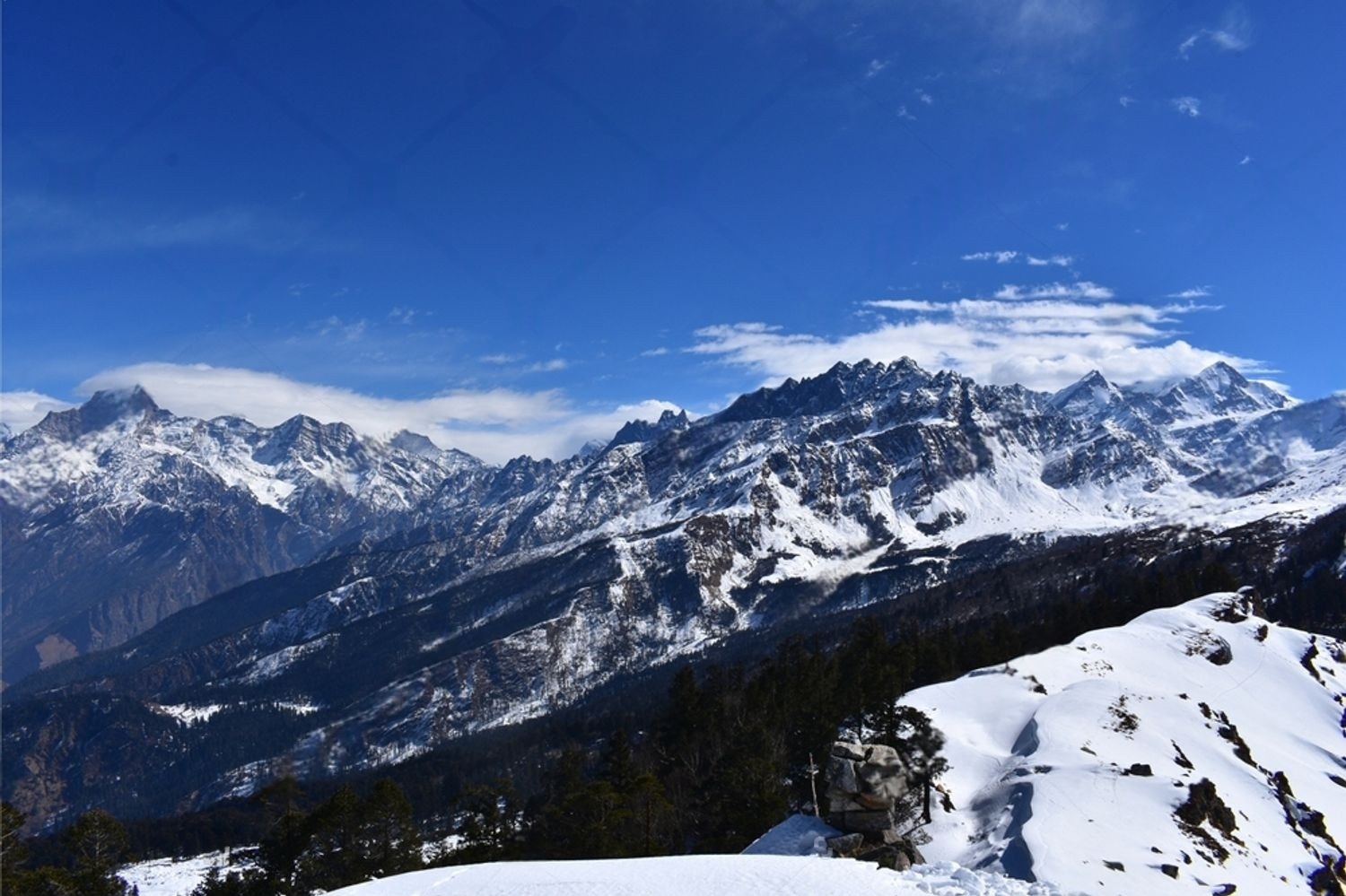
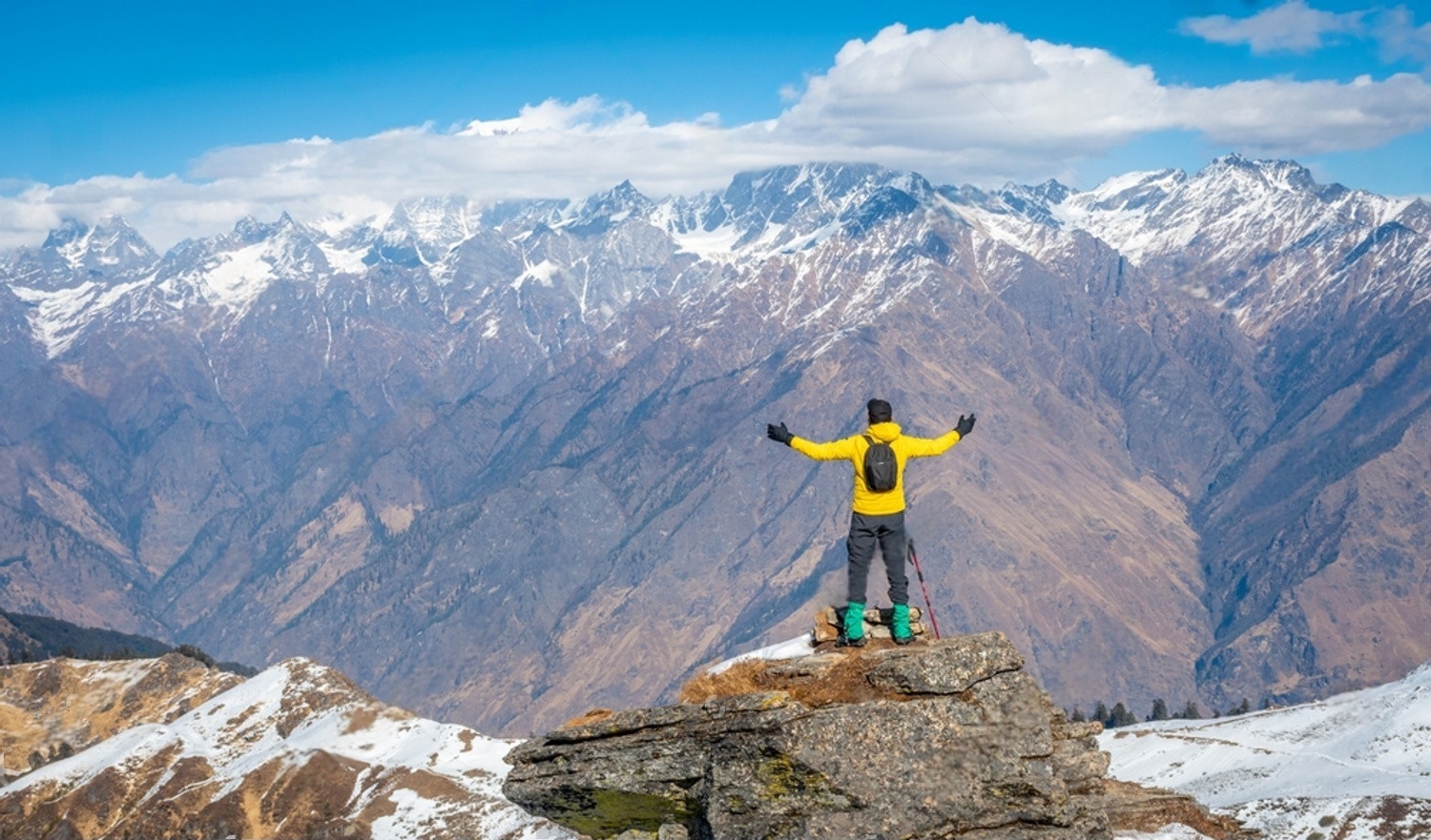
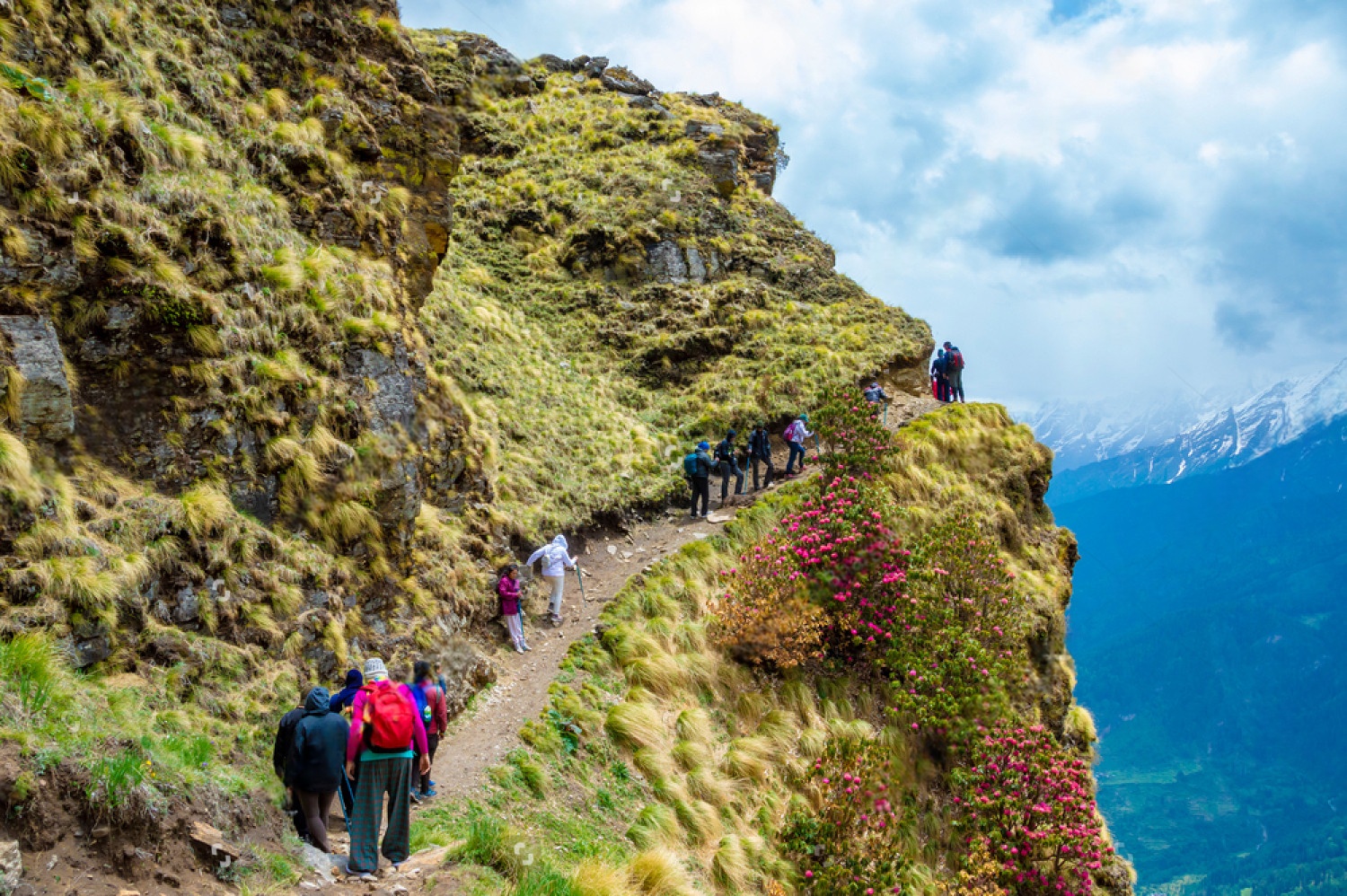
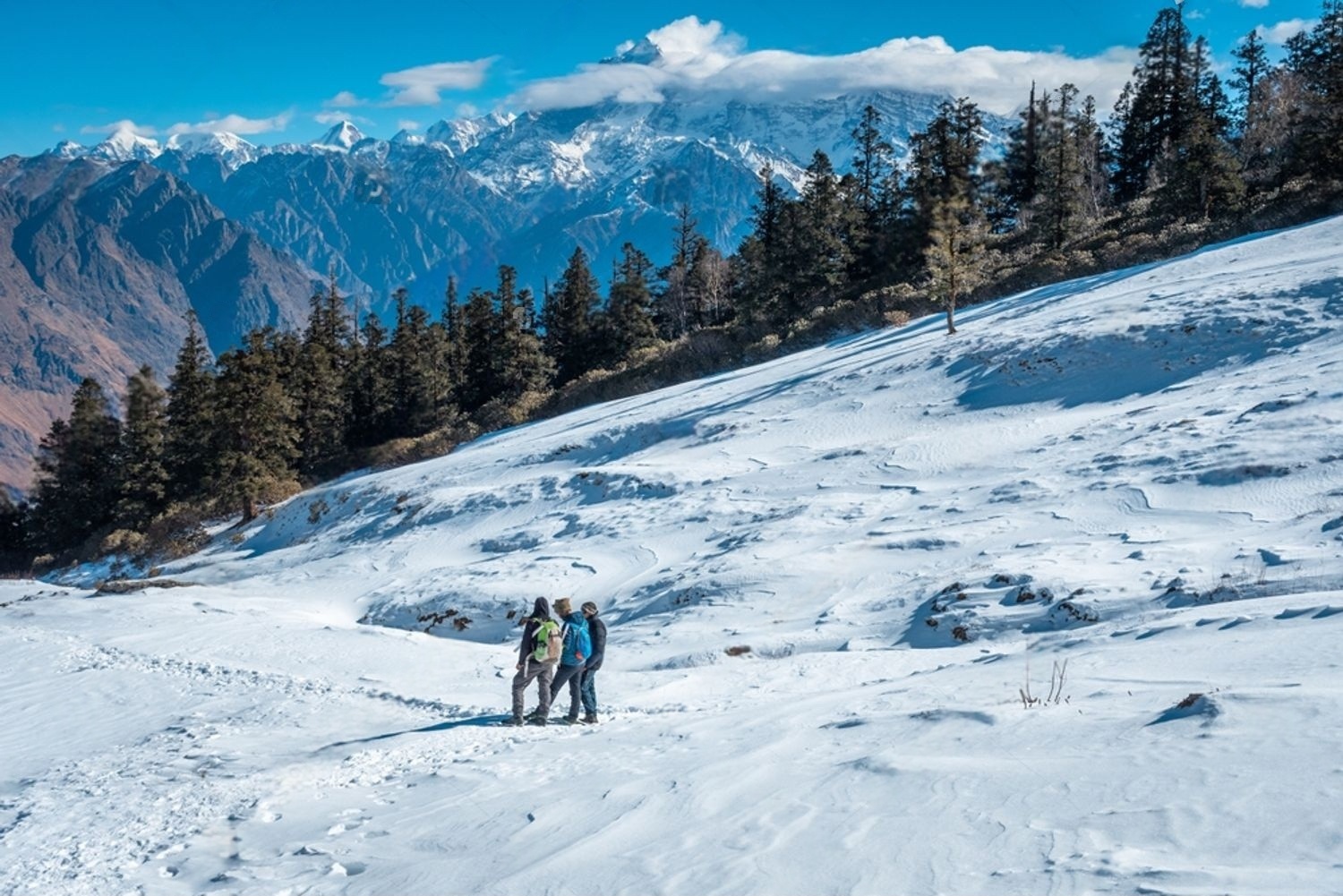
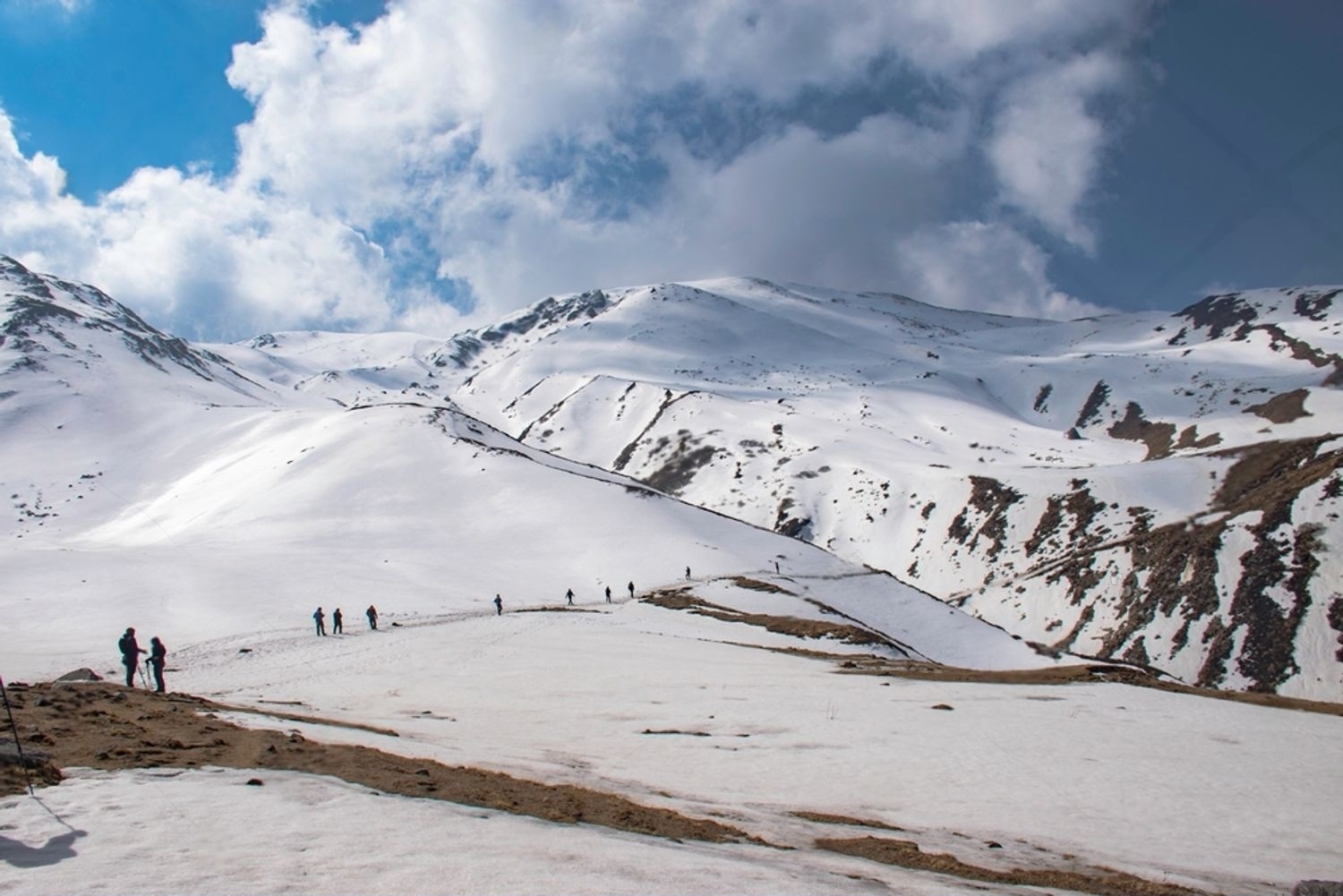
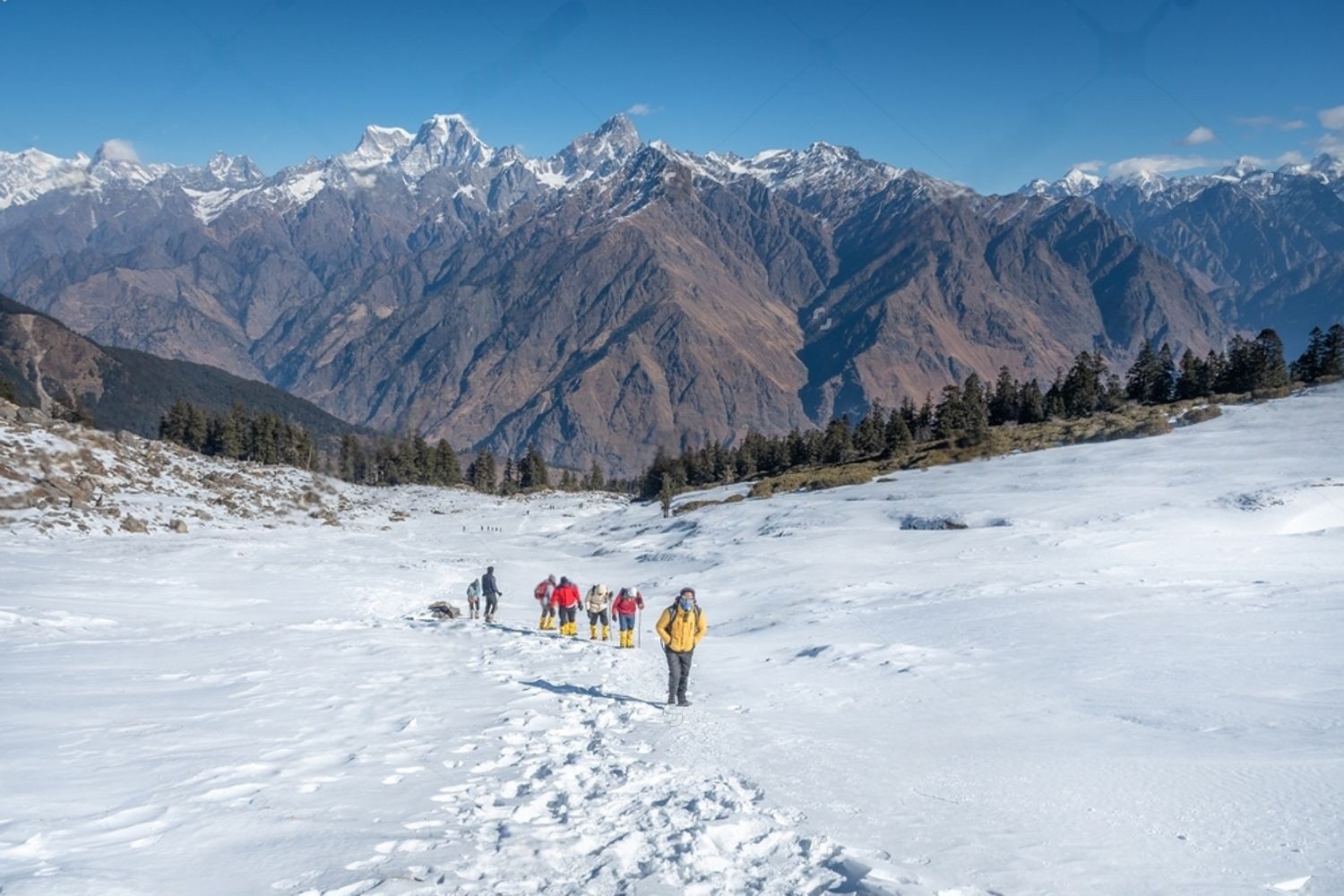
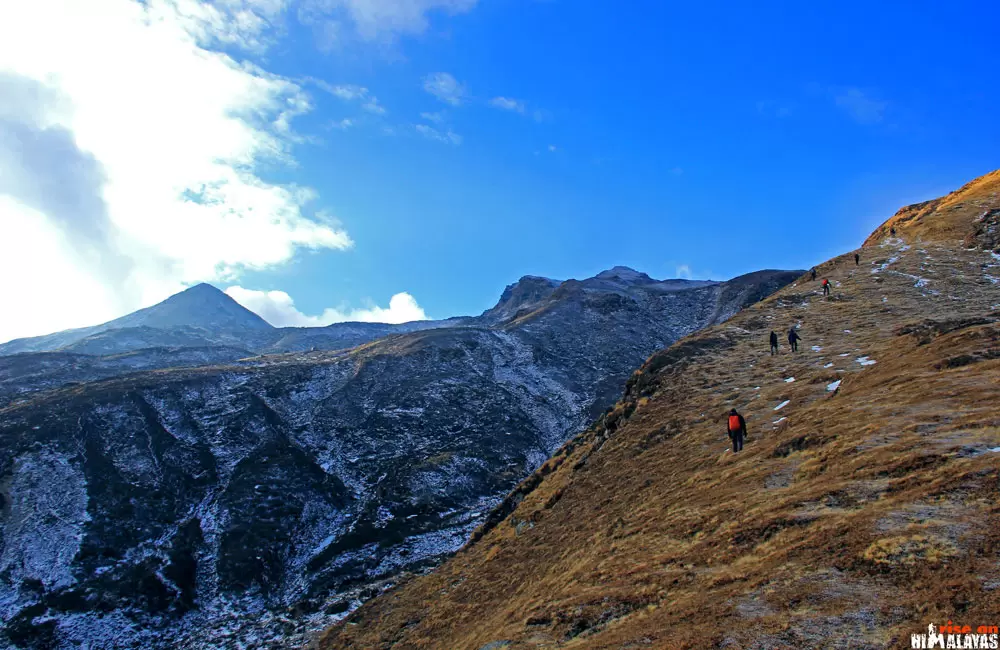
Trek Route & Itinerary
Detailed Day-Wise Kuari Pass Trek Itinerary
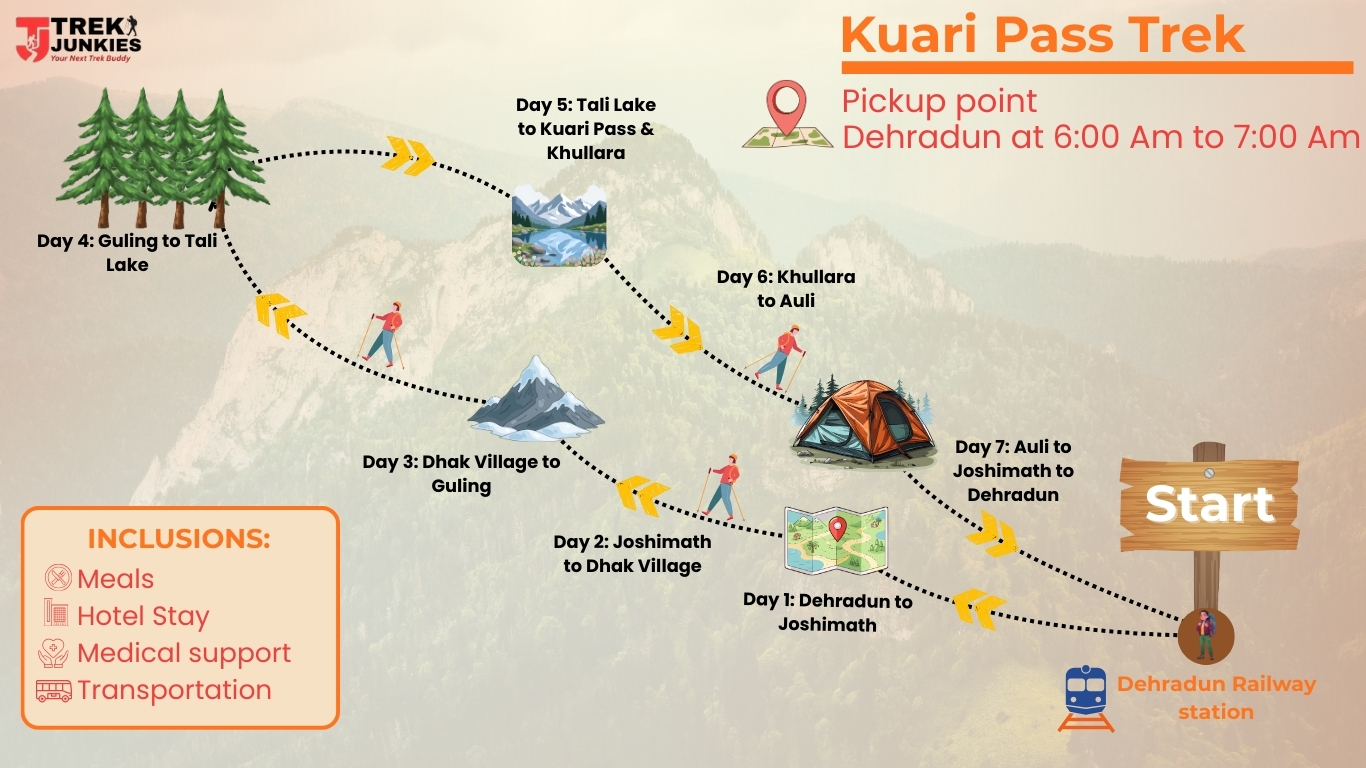
Begin your journey with a long but scenic drive from Dehradun to Joshimath, covering around 280 km in 10–11 hours. Travel along the Alaknanda and Bhagirathi rivers, passing sacred confluences like Devprayag and Rudraprayag. Enjoy views of terraced fields, mountain villages, and distant snow peaks. Reach Joshimath by evening and rest. Overnight stay in a hotel or guesthouse.
After breakfast, drive for about 2 hours to Dhak village. This charming Garhwali settlement sits amidst terraced fields and mountain slopes. Explore the village, meet locals, and soak in the peaceful atmosphere. Use the day to check your gear and prepare for the trek. The calm surroundings help you mentally shift into trekking mode. Overnight stay in a guesthouse or homestay.
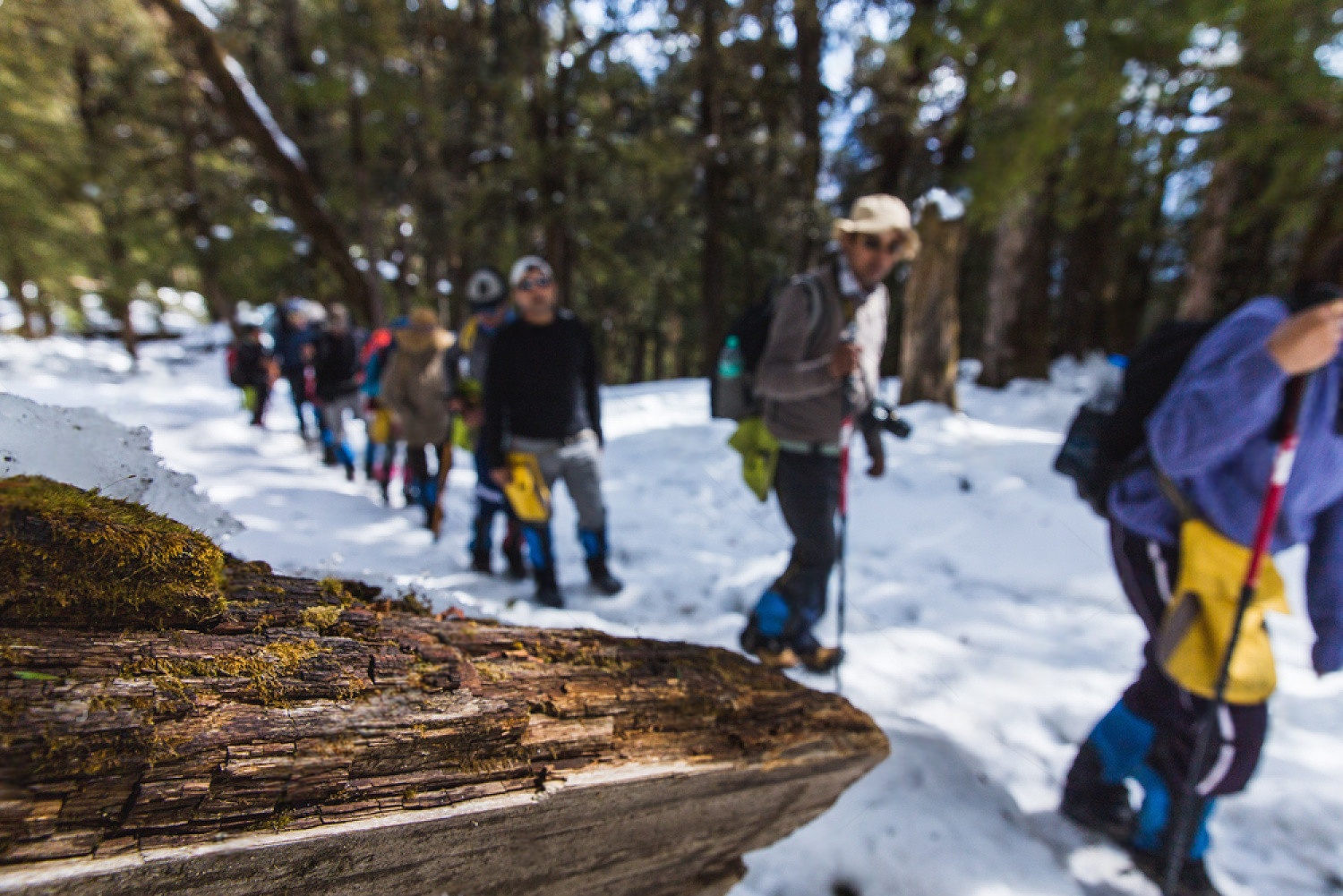
Today marks the start of your trek. Walk through forests of oak and rhododendron, gaining steady altitude. The trail passes small farms and quiet clearings before entering dense woods. In winter, the path turns into a snowy tunnel. After 5–6 hours of trekking, reach Guling, a quiet campsite surrounded by trees. Relax and enjoy a peaceful mountain evening. Overnight stay in tents.
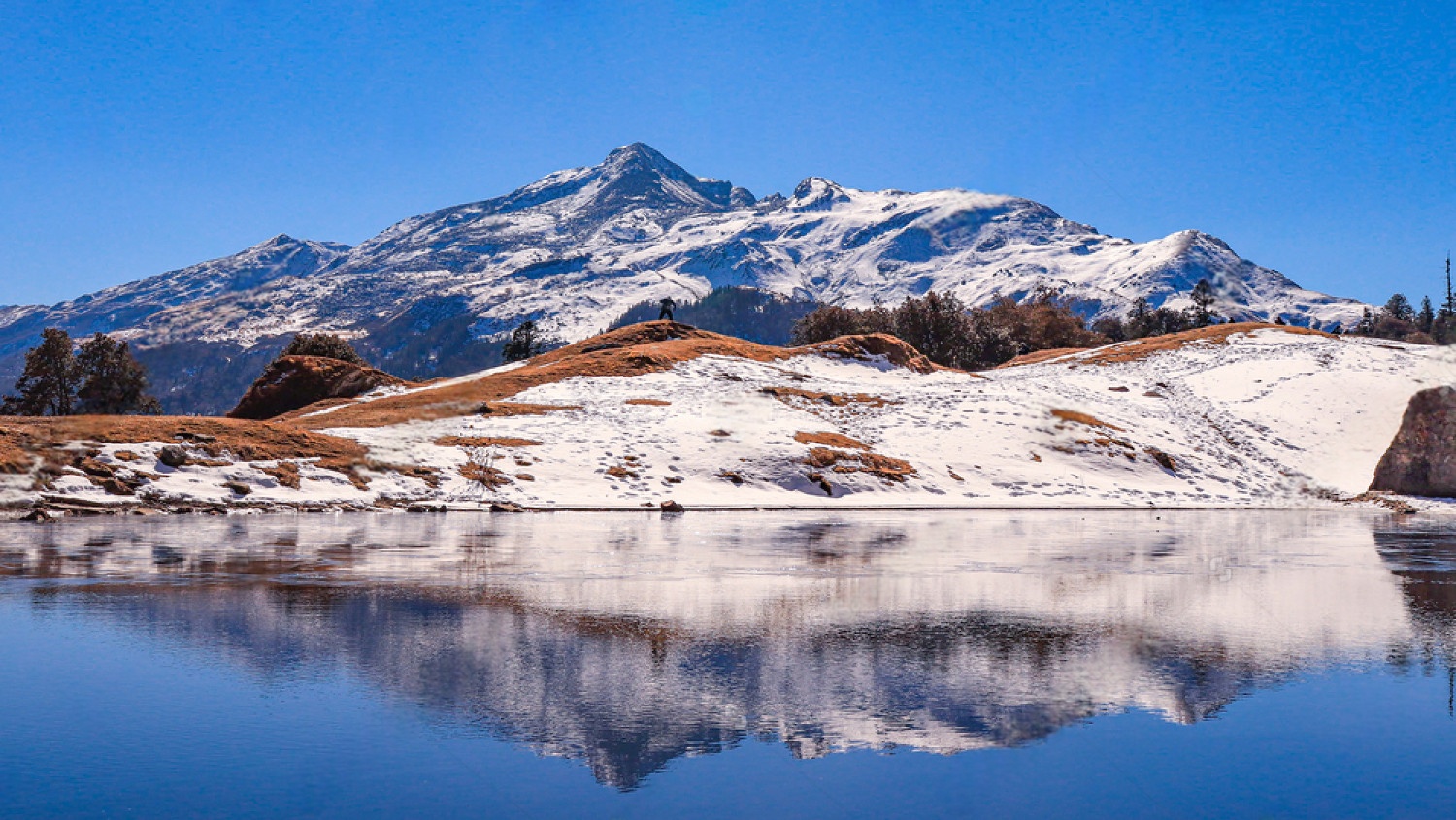
Trek uphill through alpine forests that slowly open into wide meadows. The scenery becomes more dramatic with increasing altitude. After 5–6 hours, reach Tali Lake, a beautiful high-altitude campsite. In winter, the lake freezes into a white sheet. The campsite offers stunning views of Nanda Devi and Dronagiri glowing during sunset. A perfect place to unwind and enjoy the Himalayas. Overnight in tents.
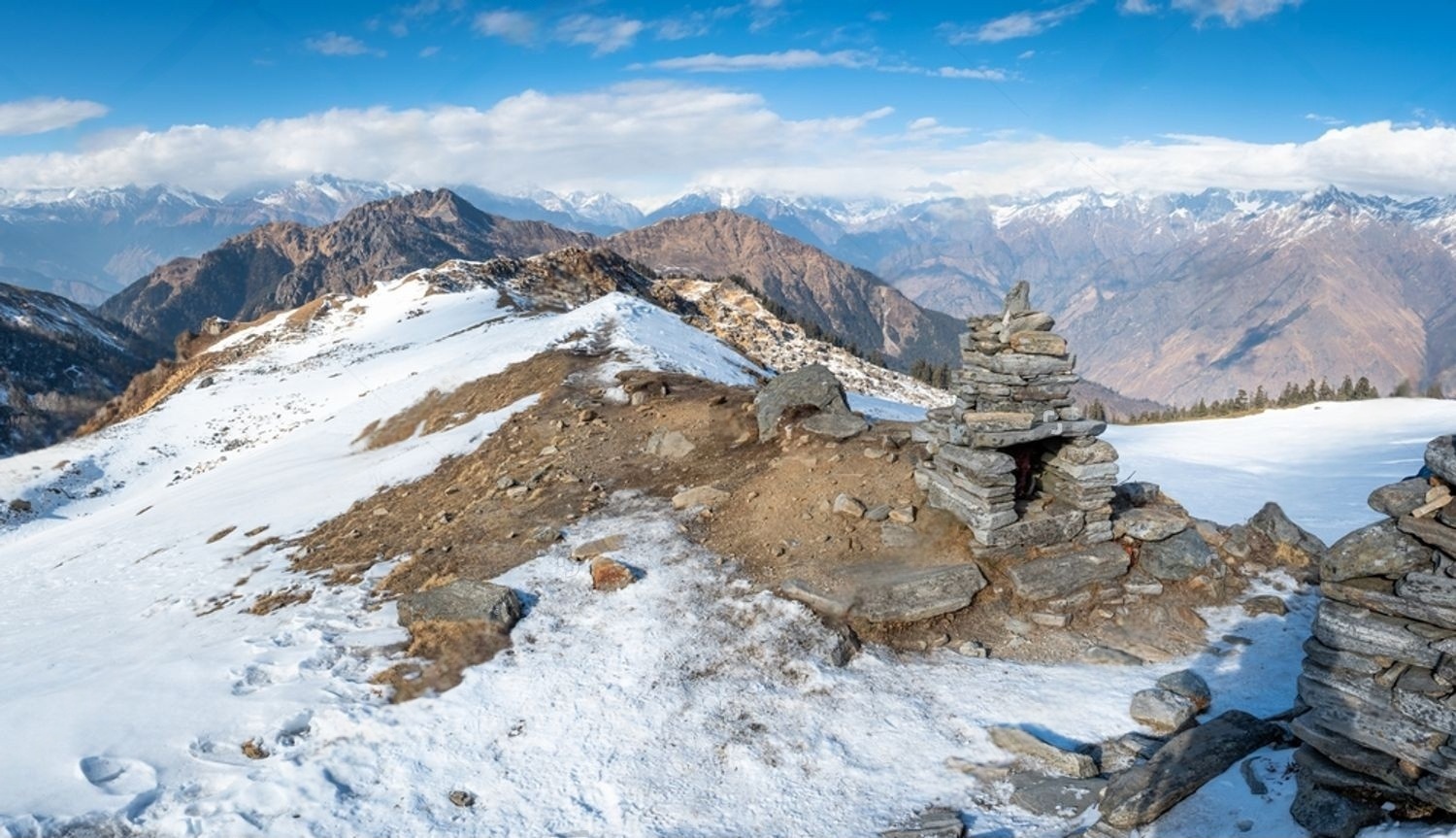
Start early for the summit push to Kuari Pass. The climb is gradual but rewarding. From the top, witness breathtaking 360-degree views of peaks like Nanda Devi, Kamet, Trishul, and Chaukhamba. After spending time soaking in the panorama, descend through meadows and forests to Khullara village. Reach by afternoon and relax after the most scenic day of the trek. Overnight in tents or guest houses.
Descend through forests and open slopes toward Auli, one of India’s most famous mountain resorts. The trail offers continuous views of snow-clad peaks and wide meadows. As you reach Auli, the landscape opens into ski slopes in winter and lush green fields in summer. Spend the evening celebrating your successful trek and enjoying the Himalayan scenery. Overnight stay in a hotel or guesthouse.
After breakfast, descend to Joshimath by cable car or road. From here, begin your long return drive to Dehradun. The journey takes around 10–11 hours through river valleys and mountain roads. Carry back memories of snowy passes, golden sunsets, and endless Himalayan views. Reach Dehradun by evening, marking the end of your Kuari Pass Trek adventure.
Experience & Highlights
Kuari Pass Trek is special because it delivers one of the most dramatic panoramic experiences in the Indian Himalayas. From the summit, trekkers are rewarded with a full 360-degree view of more than twelve towering peaks, including Nanda Devi, Dronagiri, Kamet, Chaukhamba, and Hathi Parbat. Very few treks in India place you so close to such a powerful lineup of giants in a single frame. The trail itself feels like a journey through changing worlds—from dense oak and rhododendron forests to open alpine meadows and high ridgelines. Add to this the peaceful mountain villages and beautifully placed campsites with sunrise and sunset views, and every day feels unique. This blend of epic scenery, varied terrain, and quiet Himalayan life makes Kuari Pass a truly unforgettable trekking experience.
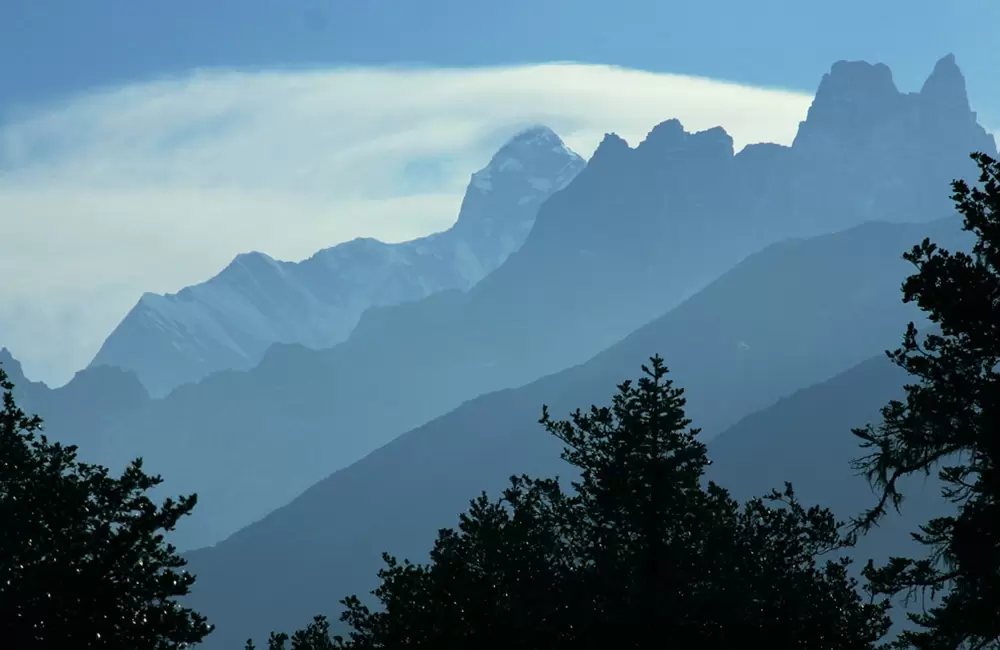
The scenic beauty of the Kuari Pass Trek unfolds layer by layer as you climb higher. The biggest highlight is the summit view, where a breathtaking 360-degree panorama reveals peaks like Nanda Devi, Dronagiri, Kamet, and Chaukhamba glowing against the sky. The sunrise from Kuari Pass is unforgettable, with snow-covered mountains turning gold and pink. Along the way, the trail moves through thick oak forests, open into vast alpine meadows like Gorson Bugyal and Tali Top, and crosses ridges with deep valleys on both sides. Each campsite is perfectly placed for stunning sunsets and starry nights. From green valleys and terraced fields to pristine white snowfields in winter, the ever-changing scenery keeps the trek visually exciting from start to finish.
The Kuari Pass Trek passes through rich Himalayan forests and high-altitude landscapes filled with natural diversity. Lower sections are dominated by oak, rhododendron, and deodar trees, creating cool green tunnels in summer and snowy corridors in winter. In spring, bright red and pink rhododendron flowers light up the trail. Higher up, alpine meadows are covered with hardy grasses and wildflowers adapted to mountain life. Birdwatchers may spot Himalayan monals, snow pigeons, and colorful jays in the forests. If you’re lucky, you might glimpse mountain goats or deer from a distance. The constant presence of massive peaks—especially Nanda Devi, Dronagiri, Kamet, and Neelkanth—adds drama at every turn, making nature and views the true stars of this trek.
Difficulty & Fitness
Easy to moderate. Perfect for beginners with basic fitness. Gentle ascents and well-defined trails make it one of the most accessible Himalayan treks.
Absolutely! Kuari Pass is one of the best beginner-friendly treks. The gradual trails, moderate altitude, and stunning scenery make it perfect for first-time trekkers.
Absolutely! Kuari Pass is one of the best beginner-friendly treks. The gradual trails, moderate altitude, and stunning scenery make it perfect for first-time trekkers.
Preparation Guide
Proper clothing is crucial for a comfortable trek in the cold mountain weather. Pack thermal innerwear, warm fleece jackets, and a good quality waterproof outer layer to protect against wind and snow. Bring multiple pairs of woolen socks, warm gloves, and a beanie or cap that covers your ears. Trekking pants should be quick-dry and comfortable, and don't forget a down jacket for extra warmth at higher altitudes. Good trekking shoes with strong grip are essential for walking on snow and rocky terrain.
Your backpack should include important gear and personal items. Carry a sturdy backpack with rain cover, a water bottle, sunglasses to protect against snow glare, and sunscreen with high SPF. Pack a headlamp with extra batteries for early morning starts and evening use. Include a basic first-aid kit with personal medicines, energy bars, dry fruits, and glucose for quick energy. A trekking pole helps maintain balance on snowy trails.
Other essentials include toiletries, a small towel, and wet wipes since bathing facilities are limited in the mountains. Bring your ID proof, necessary permits, and some cash as ATMs aren't available on the trek. A camera or phone with good battery backup will help capture the stunning views. Remember to pack light but smart, carrying only what you truly need.
Layering is the key to staying comfortable during the Kuari Pass Trek. Start with a good base layer of thermal innerwear that keeps you warm and wicks away sweat from your body. Over this, wear a fleece jacket or sweater as your mid-layer for insulation. The outer layer should be a waterproof and windproof jacket that protects you from snow, rain, and cold mountain winds. This three-layer system lets you add or remove clothing as the temperature changes throughout the day.
For your lower body, wear comfortable trekking pants made from quick-dry material. Avoid jeans as they become heavy and uncomfortable when wet. Thermal leggings underneath your pants provide extra warmth at higher altitudes and during cold nights. Bring at least three pairs of woolen or synthetic trekking socks to keep your feet warm and dry. Change socks daily to prevent blisters and discomfort.
Accessories are just as important as your main clothing. Wear a warm beanie or woolen cap that covers your ears completely. Carry insulated gloves to protect your hands from freezing temperatures, especially during early morning walks. Good quality trekking shoes with ankle support and strong grip are essential for snow-covered trails. Don't forget sunglasses to protect your eyes from harsh sun reflecting off the snow.
Safety should always be your top priority while trekking in the mountains. Stay hydrated by drinking plenty of water throughout the day, even if you don't feel thirsty in the cold weather. Walk at a steady, comfortable pace and avoid rushing to prevent altitude sickness and exhaustion. Always follow your trek leader's instructions and stay with the group instead of wandering off alone. Listen to your body and inform your guide immediately if you feel unwell, dizzy, or experience breathing difficulties. Acclimatize properly by taking rest days when needed and never ignore warning signs from your body.
Prepare yourself physically before the trek for a better experience. Start walking or jogging at least three weeks before your trek to build stamina and strength. Practice breathing exercises to improve your lung capacity for high-altitude conditions. Carry all essential items like sunscreen, lip balm, and a basic first-aid kit. Keep your phone charged with emergency contacts saved, though network coverage may be limited in remote areas.
Respect the mountains and local environment during your journey. Don't litter and carry back all your waste to keep the trails clean. Be kind to local communities and follow their customs. Trek during daylight hours and set up camp before sunset. With proper preparation and caution, your Kuari Pass adventure will be safe and memorable.
Stay, Food & Facilities
You will stay in our cozy guesthouses at base villages and comfortable alpine tents at campsites with basic facilities and sleeping arrangements provided.
You will be provided nutritious vegetarian meals including breakfast, lunch, dinner, and evening snacks. Hot soups and tea served at campsites to keep you energized.
In case of any emergency our experienced trek leader carries first-aid kits, oxygen cylinders, and emergency communication devices. Regular health checks ensure trekker safety throughout the journey.
How to Reach Kuari Pass Trek
Simply reach Dehradun, and leave the logistics to us. We organize transport from the designated pickup point directly to the base camp. Enjoy a hassle-free, scenic drive through the mountains.
The nearest railway station is Dehradun, which is well-connected to major cities like New Delhi. Simply book your tickets to Dehradun; once you arrive, our team will receive you at the station or designated meeting point to commence the journey to the base camp.
The nearest airport is Jolly Grant Airport in Dehradun, which has regular flights from Delhi and other major cities. Once you land, simply take a taxi to the designated meeting point in Dehradun city. From there, we will pick you up and manage the entire journey to the base camp.
Cost & Inclusions
Trek packages range from ₹6,000 to ₹12,000 per person, including accommodation, meals, guide, permits, and transportation from Dehradun to base camp.
Personal expenses, travel insurance, porter charges for personal bags, additional meals in Dehradun, tips, and any items not mentioned in inclusions.
Personal expenses, travel insurance, porter charges for personal bags, additional meals in Dehradun, tips, and any items not mentioned in inclusions.
Permissions & Guidelines
Forest permits and camping permissions mandatory. Trek operators arrange all necessary permits from Uttarakhand Forest Department. Carry valid ID proof for verification.
Why You Should Choose Kuari Pass Trek with Us
01
Experienced Guides & Safety First
Our certified trek leaders with 10+ years of experience ensure your safety with proper acclimatization, emergency protocols, and expert navigation throughout the journey.
02
Local Expertise
Our team belongs to these mountains, growing up walking these trails. Their deep understanding of local weather, culture, and hidden spots makes your trek experience richer and more authentic.
03
24/7 Support & Assistance
Round-the-clock support team available for queries, emergencies, and assistance. Stay connected with base camp throughout your trek for complete peace of mind.
Similar Treks
Kedarkantha Trek
Roopkund Trek
Brahmatal Trek
Gulabi Kantha Trek
Frequently Asked Questions
Snowfall is not completely guaranteed on Kuari Pass Trek, but your chances are very high during winter months. From December to March, the entire trekking route is already covered in thick snow from previous snowfall, and fresh snowfall is extremely common during this period. You'll almost certainly experience snow-covered trails, frozen streams, and beautiful white landscapes throughout your journey.
January and February have the highest chances of witnessing actual snowfall during your trek. Some batches experience heavy snowfall creating magical moments, while others trek through stable weather with existing snow cover. Either way, winter guarantees stunning snowy landscapes and the complete winter trekking experience you're dreaming of.
Yes, beginners can absolutely do Kuari Pass Trek! This is one of the best winter treks for first-time trekkers because it offers the perfect balance of challenge and accessibility. The well-marked trails, gradual climbs, and moderate altitude of 12,516 feet make it achievable for anyone with basic fitness. You don't need any technical skills or previous trekking experience to complete this beautiful journey.
That said, you should prepare yourself physically with at least two to three weeks of regular walking and light cardio before the trek. Our experienced guides support you throughout the journey, helping you at difficult sections and ensuring your safety. With proper preparation and determination, beginners successfully complete Kuari Pass and fall in love with Himalayan trekking.
Yes, Kuari Pass Trek is safe in winter when done with experienced guides and proper preparation. The well-established trail and moderate altitude of 12,516 feet make it one of the safer winter treks in the Himalayas. Our professional guides understand winter mountain conditions, carry emergency equipment, and choose secure campsites away from avalanche-prone areas to ensure your safety throughout the journey.
Winter does bring challenges like temperatures dropping to minus 10 degrees Celsius, deep snow on trails, and rapidly changing weather. You need quality warm clothing, proper trekking shoes with strong grip, and good fitness to handle these conditions safely. Trek with a reputable company, follow your guide's instructions carefully, and come prepared—thousands complete Kuari Pass safely every winter with amazing memories.
Temperature on Kuari Pass Trek varies significantly by season and altitude. During winter from December to March, daytime temperatures range from 5 to 10 degrees Celsius at lower sections when the sun is shining. Higher altitudes and the summit can drop to 0 to 5 degrees during the day. Nights are extremely cold with temperatures plunging to minus 5 to minus 10 degrees Celsius at campsites.
In spring and autumn from April to June and September to November, the weather is much milder. Daytime temperatures range from 10 to 15 degrees Celsius, making trekking comfortable. Nights remain cool at 0 to 5 degrees but are much more pleasant than winter. Wind chill at exposed ridge sections makes it feel colder, so always pack warm layers regardless of season.